
Gold prices Slightly Declined on Wednesday as Investors Awaited Inflation Report

Gold prices dipped slightly on Wednesday as investors awaited crucial U.S. inflation data that could influence the Federal Reserve's September policy meeting. While short-term gold prices may face pressure, the long-term outlook remains bullish amid expectations of future rate cuts and ongoing geopolitical tensions.

Summary

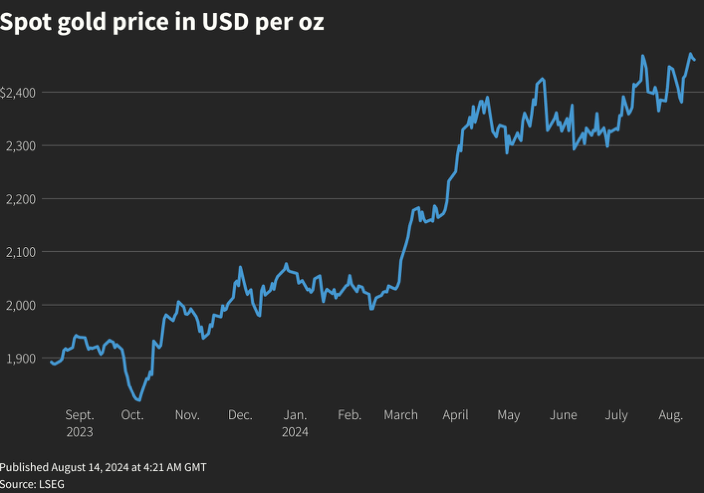
Gold prices slightly declined on Wednesday as investors awaited a key U.S. inflation report, which could influence the Federal Reserve's policy decisions in September. Spot gold fell 0.2% to $2,460.89 per ounce, while U.S. gold futures decreased by 0.3% to $2,500.10. The upcoming U.S. consumer price index (CPI) data is expected to show a small increase in inflation, with a potential impact on gold prices depending on whether the data aligns with market expectations for rate cuts. While short-term prices may drop if the CPI data disappoints, gold is expected to rise in the long term as the U.S. economy weakens. Additionally, geopolitical concerns, particularly involving Iran, continue to influence gold purchases. Other precious metals, including silver, platinum, and palladium, saw mixed movements.

Gold Prices Inch Lower as U.S. Inflation Data Looms

Gold prices edged lower on Wednesday as investors took a cautious stance ahead of a key U.S. inflation report due later in the day. The data could play a crucial role in shaping the Federal Reserve’s policy decisions for its upcoming September meeting, making it a pivotal moment for the gold market.


Spot gold slipped 0.2% to $2,460.89 per ounce by 0537 GMT, marking a slight decline from its recent record high of $2,483.60. Similarly, U.S. gold futures saw a 0.3% drop, settling at $2,500.10 per ounce. These movements reflect a market in waiting, as traders and investors anticipate the release of the U.S. consumer price index (CPI) data.

The CPI report, scheduled for release at 1230 GMT, is expected to show a month-on-month inflation increase of 0.2%, with a slight deceleration in the annual core inflation rate to 3.2%. This data will be critical in determining the Federal Reserve’s approach to interest rates, which has a direct impact on gold prices.

Kyle Rodda, a financial market analyst at Capital.com, suggested that gold prices could dip to around $2,300 if the inflation data does not align with expectations of upcoming rate cuts. However, he remains optimistic about the long-term prospects for bullion, predicting that gold will rise as the U.S. economy weakens enough to prompt significant rate cuts by the Fed.

Recent data showing weaker-than-expected U.S. producer prices has reinforced the market’s belief that cooling inflation may allow the Fed to reduce rates soon. The CME FedWatch Tool indicates that traders currently see a 54% chance of a 50-basis-point rate cut in September. However, Atlanta Fed President Raphael Bostic cautioned that he needs to see more data before supporting a rate reduction.

Gold, traditionally viewed as a safe haven during geopolitical tensions, continues to attract interest from investors wary of potential conflicts. Many are buying gold in anticipation of possible retaliatory actions from Iran, although these positions may be unwound if tensions de-escalate. A potential ceasefire deal in Gaza, emerging from talks this week, could prevent further escalation and impact gold prices.

In the broader precious metals market, spot silver fell 0.4% to $27.73 per ounce, and platinum dropped 0.5% to $931.50. Palladium bucked the trend, rising 0.3% to $941.00 after reaching its highest level since late July in the previous session.

As the market digests the upcoming U.S. inflation data and geopolitical developments, gold prices remain in a state of flux, with potential for significant movements depending on how these factors unfold.

Share:

More Posts

Oil Prices Rise Amid Middle East Conflict and Declining U.S. Crude Inventories

Oil prices surged on Wednesday as U.S. crude and gasoline inventories dropped, coupled with growing concerns over the potential expansion of the Israel-Gaza conflict, which could disrupt global oil supplies. Brent crude rose by 0.7% to $81.25 per barrel, while U.S. West Texas Intermediate increased by 0.8% to $78.94. The situation in the Middle East, particularly involving Iran, is seen as a significant risk to oil prices, with potential threats to supply chains if the conflict escalates.

Escondida Strike: Potential Impact on the World’s Largest Copper Mine

The Escondida mine in Chile, the world’s largest copper mine, is facing a significant disruption as its powerful workers’ union has launched a strike, demanding a larger share of profits. Known for its effective strikes in the past, the union represents 61% of the workforce and has significant leverage. While copper prices remain stable for now, a prolonged strike could disrupt global supply and drive up prices, depending on the success of ongoing negotiations between the union and BHP.

Elliott Management Targets Southwest Airlines Board in Push for Leadership Overhaul

Elliott Investment Management has launched a bold campaign to replace the majority of Southwest Airlines’ board, aiming to oust the current CEO and overhaul the company’s leadership. Amid Southwest’s declining stock price and challenges in implementing a successful turnaround, Elliott’s move represents a significant push for change at the airline.

Markets have Recovered from Recent volatility: Will the Calm Continue?

Asian markets have rebounded from recent volatility, with attention now turning to Wednesday’s U.S. inflation report, which could test the market’s current calm. With mixed expectations for Federal Reserve rate cuts and key data releases from New Zealand and India on the horizon, investors are cautiously optimistic but remain alert to potential risks.

Send Us A Message

Join our newsletter to stay updated